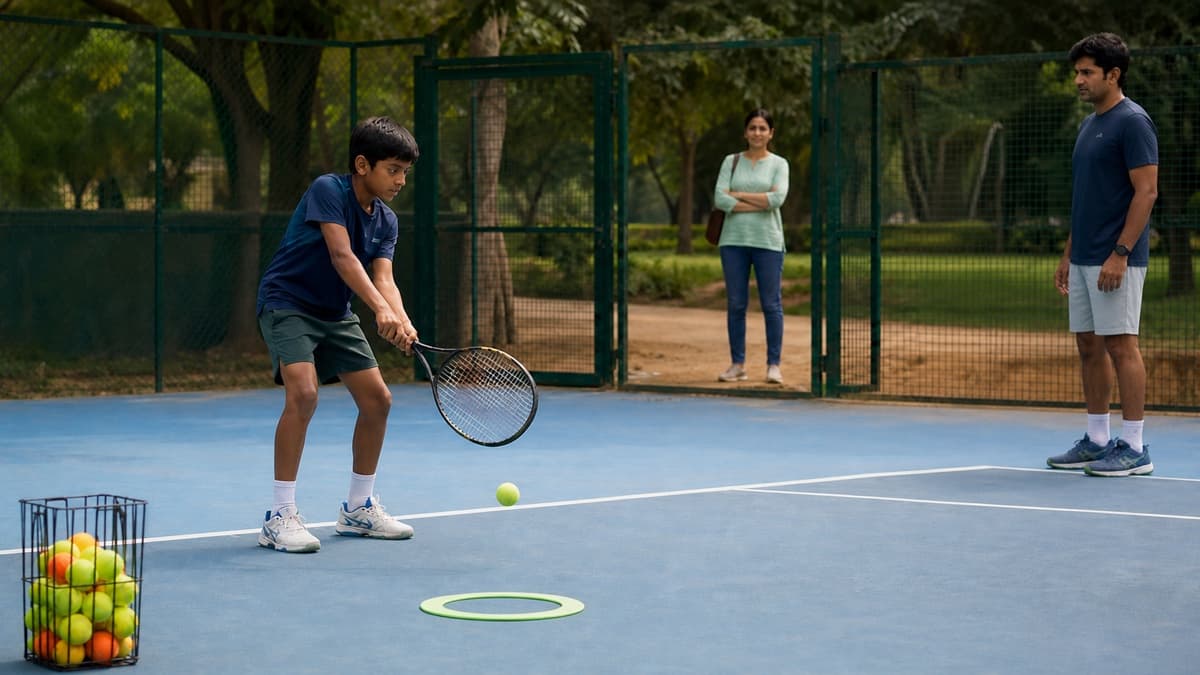
Use individual time for one defined purpose
A private session can give a coach time to observe one recurring issue closely, introduce a technical adjustment or clarify feedback without managing a full group at the same time.
The aim should be more precise than “improve faster”. Useful purposes might include understanding one serve change, finding a repeatable starting routine or checking why a particular skill is breaking down. The child should leave knowing what to practise, not carrying several new instructions.
Do not use a private lesson to solve the wrong problem
Group sessions provide varied partners, changing balls, movement, cooperation, scoring and decisions. Match play provides pressure and problem-solving. Rest protects space for recovery and life outside tennis.
If the real need is more point play, confidence with peers, independent practice or a lighter schedule, individual coaching may add cost and workload without addressing it. It also should not be booked only because another child has it. Some children enjoy focused attention; others learn more freely in a group.
Try, practise and review
Before the lesson, agree on the question it should answer and what useful change would look like. Start with one assessment or a short, bounded block rather than an indefinite package. Afterwards, give the child time to use the learning in normal practice.
Review the outcome before booking an open-ended series. If the child received conflicting instructions, became more confused or had no suitable place to practise the change, resolve that with the responsible coach first.
Use an open, observable setting and check the coach’s accreditation and safeguarding arrangements under the rules that apply locally. One-to-one attention should never mean an isolated or unclear environment.
Put it into practice
What parents can do
- Name one specific need before considering individual coaching.
- Ask why one-to-one attention is the best format for that need.
- Check the child’s willingness and their total weekly load.
- Agree where the learning will be practised and how it will be reviewed.
- Confirm the setting, coach accreditation and local safeguarding arrangements.
Choose the right next step
Who to contact—and what to say
- Coach: “What specific need would individual time address that the current group cannot?”
- Coach: “Could group practice, supervised match play or independent practice meet this need instead?”
- Child: “Would individual time feel helpful to you, or would you prefer to keep working on this in the group?”
Evidence basis
Sources used for this guide
Last editorial update 25 July 2026
Share this guide with another parent