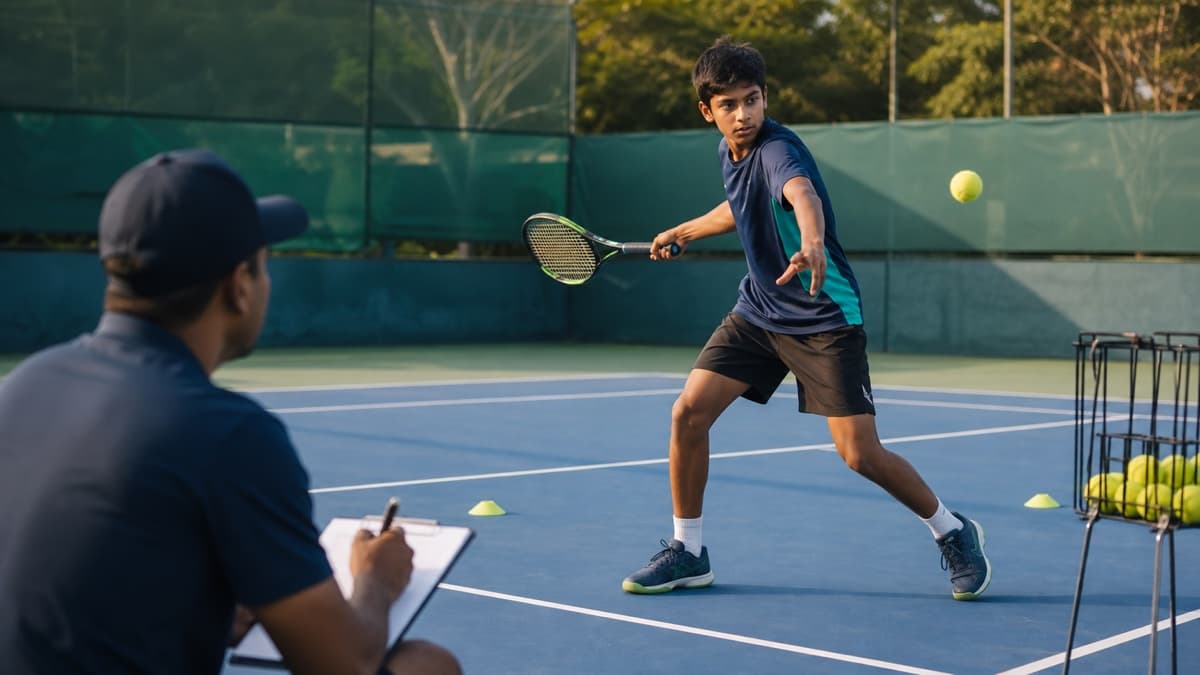
Track skills the child can influence
Look for changes in preparation, movement, choices and recovery after mistakes. These behaviours travel from one opponent to the next.
- Starting points with a repeatable routine.
- Choosing safer targets under pressure.
- Recovering court position after hitting.
- Staying engaged when behind.
- Naming one useful lesson without being prompted.
Use one process goal at a time
Before a session or match, ask: “What is one thing you want to practise today that does not depend on winning?”
Afterwards, return to that goal rather than replacing it with a score-based review. A process goal describes an action—such as resetting after an error—not an outcome such as reaching a final.
Review over weeks, not points
Ask the coach for one current priority and observe it over several weeks. Compare the child with their earlier game, not with another player’s timetable.
Say: “I noticed you reset more quickly after mistakes today.” Specific observations are more useful than labels such as talented, lazy or not competitive enough.
Put it into practice
What parents can do
- Ask the coach for one current priority.
- Notice decisions, routines and recovery after errors.
- Let the child name one thing they learned.
- Review patterns over weeks rather than every session.
Choose the right next step
Who to contact—and what to say
- Coach: “What progress should we notice away from the scoreboard?”
- Coach: “What can we reinforce without giving technical instructions?”
- Coach: “Results have become our child’s only measure of success. How can we reset the goals together?”
Evidence basis
Sources used for this guide
Last editorial update 25 July 2026
Share this guide with another parent